The complete playbook for HR leaders, recruiters, and startup founders who need to hire from campuses fast, fairly, and without running their team into the ground.
Campus recruitment season arrives the same way every year. Suddenly, there are hundreds of applications piling up, a dozen colleges to coordinate with, interview days to schedule across multiple cities, and a small HR team expected to evaluate every single candidate with the same energy and rigour on day one as they have on day fifteen.
The result, in most organisations, is one of two things. Either the process gets rushed, and quality suffers. Or the team gets exhausted, and key people start making mistakes, missing follow-ups, or burning out entirely.
There is a better way. And in 2026, with AI-powered recruitment tools now accessible to companies of every size, running campus hiring at a genuine scale without grinding your HR team into the ground is not just possible. It is the new standard.
Here is the complete playbook.
Why is campus recruitment uniquely hard to scale?
Campus hiring is different from standard recruitment in ways that matter a great deal when it comes to volume and speed.
First, the timelines are compressed. Universities operate on academic calendars that do not care about your Q3 hiring plan. Placement seasons open and close quickly. If you are not ready to move fast, you lose the best candidates to companies that are.
Second, the volumes are enormous. A mid-sized company attending five campus drives might receive 500 to 2,000 applications in a matter of weeks. A large organisation running a national campus programme could be looking at tens of thousands. No manual process handles that well.
Third, consistency is almost impossible to maintain at scale. When you have multiple recruiters conducting interviews across multiple campuses on the same day, the experience each candidate receives varies enormously. Some get thorough, structured evaluations. Others get a tired recruiter on their last interview of the day.
Campus recruitment does not fail because companies lack intent. It fails because the process was never designed to handle the volume without breaking the people running it.
"The real cost of a broken campus hiring process
- 60% of campus hires who leave within a year cite a poor onboarding and screening experience as a factor. (SHRM)
- 3x more likely to lose a campus offer acceptance when response time exceeds 5 days post-intervie
- 40% of recruiter time in campus season is spent on scheduling, reminders, and admin, not actual evaluation.
When campus recruitment breaks down, the consequences are not just operational. You lose good candidates to faster competitors. You make hiring decisions based on incomplete or inconsistent data. You onboard people who were not the best fit because the process was too overloaded to filter properly. And your HR team carries the stress of knowing they could have done better if they had the right tools.
Step 1. Plan the process before the season opens
The biggest mistake companies make in campus recruitment is treating it like a reactive exercise. Applications open, the flood begins, and everyone scrambles to keep up.
The teams that do this well plan months in advance. Before a single application arrives, they have answers to the following questions:
- How many hires do we actually need, and for which roles and locations?
- What are the minimum criteria for each role, stated clearly enough that a screening system can apply them consistently?
- What does the interview structure look like, and who owns each stage?
- What are the SLAs at each step: screening turnaround, interview scheduling, and offer release?
- Which campuses are priority targets, and which are secondary?
These questions sound obvious, but most companies cannot answer them with confidence before the season starts. Getting clear on them before applications open is what separates a controlled campus hiring drive from a chaotic one.
Step 2. Stop manually screening every application
If your HR team is reviewing every campus application manually and making shortlisting decisions, you have already lost the battle against burnout before the interviews even begin.
At campus hiring volumes, manual screening is not just slow; it’s also error-prone. It is inconsistent, fatigue-affected, and prone to bias. The recruiter who reads the first hundred applications is not the same person, cognitively, as the one who reads application number four hundred.
The solution is a structured, criteria-based first filter that operates before human review begins. Define your non-negotiables: minimum academic performance, required skills, eligible branches or streams, and location preferences. Let the system apply those criteria uniformly across every application.
This alone can reduce your human review workload by 60 to 80 per cent, without sacrificing a single good candidate, because the criteria you set are the same ones your recruiters were using anyway, just applied consistently and at speed.
Step 3. Replace first-round interviews with AI-powered structured interviews
This is where the biggest efficiency gain in modern campus recruitment lives, and it is the step that most HR teams have not yet taken.
Traditional campus recruitment involves sending recruiters to campuses for group discussions, aptitude tests, and first-round interviews. It is expensive in travel time, costly in recruiter bandwidth, and still produces inconsistent results because different people are running different sessions with different standards.
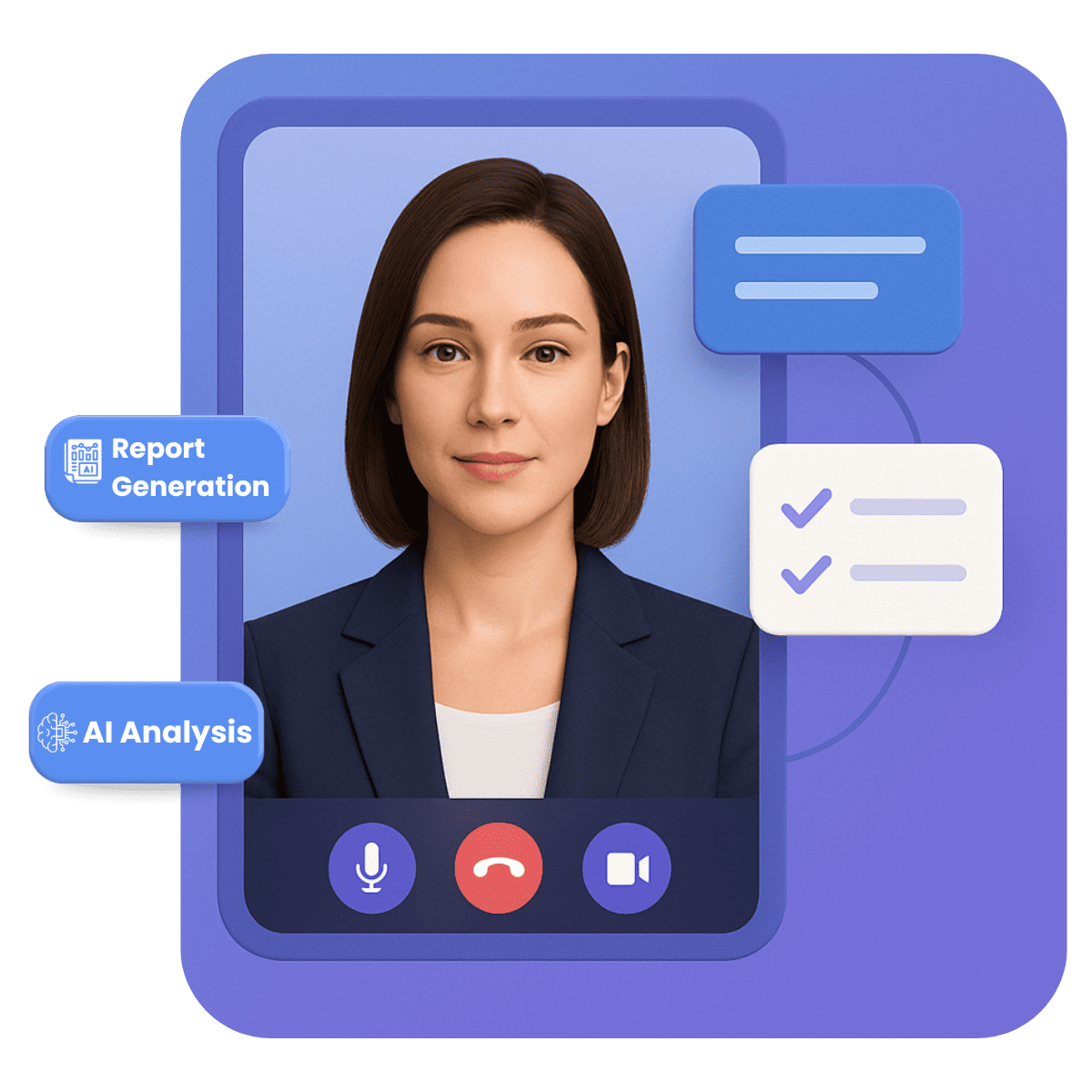
AI-powered interviews change this entirely. With easemyhiring.ai, every shortlisted campus candidate receives a structured AI interview that they complete online, at a time that works for them, before your team ever needs to get involved. The AI asks the same role-specific questions to every candidate. It evaluates responses against the same competency criteria. And the moment the interview is complete, it generates a detailed performance report with objective scoring.
For a campus drive that would have required three recruiters, five days, and two cities, you now have a complete first-round evaluation of every candidate, conducted consistently, with zero travel, zero scheduling coordination, and zero recruiter fatigue.
When easemyhiring.ai handles your campus first round, your recruiters show up to final interviews having already reviewed objective performance data on every candidate. They are better prepared, less tired, and making better decisions.
"Step 4. Automate reminders and eliminate no-shows
Campus candidates are young, often interviewing at multiple companies simultaneously, and not always reliable about tracking deadlines and interview slots. No-shows and late cancellations are a persistent drain on campus recruitment efficiency.
The traditional response is to have a recruiter or coordinator manually follow up with every candidate before their interview slot. At scale, this is simply not sustainable. You either hire a dedicated coordinator for the season or accept that some percentage of your pipeline will go dark with no warning.
easemyhiring.ai eliminates this problem entirely. The platform automatically sends timely, personalised interview reminders to every candidate in the pipeline. No manual follow-up. No coordinator overhead. No last-minute scramble when three candidates do not show for the same morning slot.
The result is a dramatically lower no-show rate and a pipeline that moves at the pace you planned for, not the pace your candidates’ WhatsApp notifications allow.
Step 5. Give hiring managers data, not gut feel
One of the most underappreciated problems in campus recruitment is what happens after the first round. Recruiters have conducted hundreds of interviews. Now they need to brief multiple hiring managers across different business units, each of whom has their own preferences, their own questions, and their own timeline.
This handoff is where campus recruitment most often loses its rigour. The briefings are verbal. The notes are incomplete. The hiring manager forms an impression based on a two-minute summary rather than structured evaluation data.
With easemyhiring.ai, the handoff is clean. Every hiring manager receives a detailed, objective performance report for each candidate they are reviewing. They see consistent scoring across the same criteria for every person in the pipeline. They can compare candidates side by side with actual data rather than asking the recruiter to recall which of the hundred interviews stood out.
This speeds up the final decision, improves its quality, and takes the burden of detailed verbal briefings entirely off your recruitment team.
Step 6. Centralise coordination across campuses and teams
For organisations running campus drives across multiple colleges or cities simultaneously, coordination overhead is one of the biggest hidden costs. Different campuses have different placement cell contacts. Different interviewers are deployed to different locations. Feedback is collected through different channels and compiled manually at the end.
The solution is a single, centralised process that operates the same way regardless of which campus a candidate comes from. When your AI interview platform handles first-round screening for candidates from every institution through the same online system, the geographic complexity of campus recruitment collapses.
Candidates from a college in Chennai and candidates from a campus in Chandigarh go through the same structured interview, receive the same objective evaluation, and appear in the same centralised pipeline for your hiring managers to review. Location becomes irrelevant to process quality.
Step 7. Protect your HR team's capacity for what matters most
Everything above comes down to one principle: your HR team’s time and cognitive energy are finite and valuable. Campus recruitment at scale will exceed both if the process does not actively protect them.
The work that requires genuine human skill in campus recruitment is relationship-building with placement cells, final-round interviews where culture fit and long-term potential are assessed, offer negotiation and acceptance management, and onboarding design. These are the things your recruiters and HR managers are actually trained to do well.
The work that does not require human skill but consumes the most time is application screening, first-round interview scheduling, sending reminders, conducting structured competency assessments, and compiling evaluation reports. This is exactly what easemyhiring.ai handles.
When you free your team from the second list, they have the capacity to do the first list extraordinarily well. And that is where the real quality of hire improvements come from.
What does a fully scaled campus recruitment process look like?
Here is what the end-to-end process looks like when AI handles the right layers:
- Applications open. Criteria-based filtering immediately reduces the pool to qualified candidates. No manual review of every application.
- Shortlisted candidates receive an AI interview invitation automatically. Automated reminders ensure completion without any recruiter follow-up.
- Easemyhiring.ai conducts structured first-round interviews for every candidate. Same questions. Same criteria. Consistent evaluation regardless of volume.
- Instant performance reports are generated and shared with hiring managers. No debrief calls. No subjective summaries. Clean, comparable data.
- Hiring managers review reports and shortlist for final rounds. Human judgment applied to a pre-qualified, data-rich pipeline.
- Final interviews conducted by your team focus on culture, potential, and role fit. The conversations that actually require human intelligence.
- Offers go out fast. Because the pipeline moved at pace and decisions were made with confidence.
The result is a campus hiring process that scales to any volume, maintains consistency across every candidate, protects your HR team from burnout, and produces better hiring decisions than a manual process ever could.
The bottom line
Campus recruitment does not have to be the annual exercise in organised chaos that it is for most companies. The volume, the speed, the multi-location coordination, and the consistency demands are all solvable problems. They just require the right process and the right tools.
easemyhiring.ai was built for exactly this use case. Structured AI interviews that scale to any volume. Automated reminders that eliminate no-shows. Instant performance reports that replace manual debrief cycles. And a centralised pipeline that gives your hiring managers clear, comparable data on every candidate regardless of which campus they came from.
Your HR team works hard enough. Give them a process that works as hard as they do.
Running campus recruitment this season? Do not let volume burn your team out.
Whether you are hiring 50 campus graduates or 5,000, easemyhiring.ai gives your team the infrastructure to do it right without doing it the hard way.
- AI-powered structured interviews for every campus candidate. Consistent. Unbiased. Scalable to any volume without recruiter involvement.
- Automated reminders that eliminate no-shows and manual follow-up. Your coordinators stop chasing and start contributing.
- Instant performance reports for hiring managers. Objective data on every candidate the moment their interview ends.
- Centralised pipeline across all campuses and cities. One process. One standard. No geographic inconsistency.
- Your HR team focused on what they do best. Relationships, culture assessment, and final decisions, not admin and scheduling.
The best campus hires are already applying. Make sure your process is fast enough, fair enough, and smart enough to find them.
"Get your free trial at easemyhiring.ai, and start with a process built for the scale you operate at.